
Contractual relationships are diverse, however, often complex as well leading to disputes between companies and individuals. Disputes may arise for many different reasons, and to which solutions may be sought through courts or through alternative means, such as arbitration or mediation. In this article, the causes of different types of disputes, dispute resolution methods and their effects are examined.
What is the difference between a commercial and a corporate dispute?
Commercial and corporate disputes are very similar in nature, however they have distinct differences. Commercial disputes usually involve distribution and sale contracts whereas corporate disputes center on the management side of businesses.
Commercial and corporate disputes are civil disputes. Civil disputes are disagreements between individuals or organizations involving private rights or contractual disagreements. Civil disputes usually take place in district courts. Certain civil litigation cases are litigated in special courts.
Root causes behind legal disputes
In any contractual relationship, a situation may arise in which the parties find themselves disagreeing with each other. Unlike in other civil disputes, such as divorce or custody disputes, commercial and corporate disputes are not always bitter confrontations. Commercial and corporate disputes may root from a variety of reasons, such as differences in interpreting contracts or from non-performance of obligations.
Contract disputes
Contracts bind parties to act in a specific and agreed manner. Although some industries use established general contract terms and conditions, the parties are fairly free to agree on the content and the terms of contracts within the principle of the freedom to contract.
The most common contractual disputes arise simply because one party fails to fulfill its contractual obligations. Such contractual breach may cause disputes between companies. Non-performance of a contract may appear as a delay of a delivery or as a defect in delivered goods. First and foremost, non-performance must be documented and a notice sent to the other party.
Contract disputes may also arise from differences in interpreting a contract. The subject of the dispute usually is not the contractual obligation itself, but how and to what extent the obligation should be fulfilled.
Shareholder disputes
A shareholder dispute is a disagreement between the owners of a company, in which the dispute is usually caused by ambiguous terms in the shareholders’ agreement. The most significant impact of such a dispute is on the business itself as the dispute may jeopardize the continuity of business operations.
Disputes may arise between shareholders over decision-making, the division of tasks and responsibilities, how the company’s profits are distributed or how financing is obtained for the company. In addition, disputes may arise when a shareholder leaves the company in which case the shares may be subject of a dispute.
Intellectual Property disputes
Intellectual property rights or also known as IPR are rights that protect creations that are intangible such as inventions, artistic works or trademarks just to name a few. IPR can be a very valuable asset for a company. Trade secrets are also intellectual property rights.
Intellectual property disputes may arise, for example when a party infringes another party’s trademark by registering a similar trademark. Intellectual property disputes are litigated in the market court, however mediation is also used as a method of dispute resolution.
Labor disputes
Labor laws regulate the relationship between an employer and employees in which disputes usually arise, for example, from a termination of employment, changes made to employment terms and conditions, disagreements regarding salaries or from discrimination in hiring or during employment.
Disputes between employers and employees are resolved in general courts. Situations involving issues with, for example, collective agreements are resolved in a labor court which is a special court such as the market court mentioned above.
The process of civil litigation
Within this chapter, the general process of a civil litigation is examined, which encompasses both commercial and corporate litigation. The civil litigation process in general courts is a bit different than litigation in special or administrative courts.
The processes of commercial and corporate litigation is initiated by a plaintiff submitting a written statement of claims to a district court. The plaintiff is the person or the organization that submits the claim to a district court. The plaintiff must present the facts and evidence in support of the claim. If a district court finds the statement of claims insufficient or unclear, the court may request the plaintiff to provide a supplementation for the claim.
Unless the claim is dismissed or rejected, the court will issue the statement of claims against a defendant. The defendant is the person or the organization that the claim is made against. The defendant is requested to provide a written response to the claim in which they admit or deny the claim with basis and proof relevant for their denial. If the defendant fails to respond to the statement of claims, a default judgement will be issued for the benefit of the plaintiff. A default judgement is made without a court hearing.
The proceeding of a litigation in a district court is divided into two stages: preparation and the main hearing. During the preparation stage, clarifications are made to the claim and defense of the parties, evidence which will be presented at the main hearing is reviewed, and the grounds for a possible mediation are assessed. If there are grounds for a mediation, the mediation can be initiated by the consent of the parties. After the preparatory stage, the case proceeds to the main hearing if no mediation is initiated.
During the main hearing, the whole dispute will be covered, and the hearing is divided into three parts: presentation of the case, presentation of evidence, and closing speeches. No new claims or evidence that were not disclosed during the preparatory stage may be presented during the main hearing.
A decision of the litigation may be issued immediately after the hearing or at a later date. The court’s decision is final unless an appeal is lodged within a specific time period. In commercial litigation, the district courts do not enforce decisions: instead, the parties themselves are largely responsible for the enforcement. A party may seek compensation through other mechanisms such as the debt recovery procedure by the National Enforcement Authority.
The costs of litigation in courts
The costs of legal proceedings in courts mainly consist of court and attorneys’ fees and compensations paid to possible witnesses. Attorneys’ fees usually exceed the court fees. The parties are responsible for covering their own expenses.
The nature and the complexity of the case as well as how the costs are divided between parties can affect the total costs of the litigation process. If the case proceeds to the main hearing, the legal costs typically are at least 15 000 euros per party. Legal costs of 40 000 euros are still fairly common. In more extensive cases, the costs may be even higher.
As a general rule, the party who loses a case in which a settlement is allowed is obligated to compensate the other party for all legal costs in their entirety. However, the law provides for exceptions where the losing party may not be required to compensate the other party’s legal costs in their entirety. The rules governing the obligation to pay compensations are complex and therefore it can be difficult to estimate the amount of compensation.
The risks of litigation in courts
In addition to legal costs, court proceedings may also be quite lengthy as the duration may vary on the type of the case and the court. In a district court, a case can take up to a year to process.
Legal proceedings always carry the risk that a court decision will not always meet expectations. If a district court’s decision is not in line with the expectations, the decision may be appealed to the court of appeal. The decision whether to grant a leave to appeal is made within a few months after the appeal has been filed, however the main hearing may take up to two years.

Alternative dispute resolution methods
Alternative dispute resolution (ADR) refers to dispute resolution outside of courts. The most common ways to resolve legal disputes between companies are mediation and arbitration. Check out our services for dispute resolution here.
Mediation
Mediation is an alternative to a court litigation. Mediation has many advantages as it is a faster, more flexible and cost-effective process. Most mediations also end in a settlement. The most important aspect of mediation is the parties’ right to self-determination, which allows them to influence the course of the mediation and the terms of the settlement. A significant difference between mediation and full-scale court litigation is that the mediation focuses on the parties’ future interests while courts examine past events.
Mediation can take place in a court or entirely outside the courts. Parties may negotiate on mediation by arranging it outside of courts, for example, through Finnish Bar Association. During a court proceeding, the parties may jointly or separately request the court to initiate mediation by submitting an informal written application. Additionally, a judge may also propose mediation for the parties.
If the parties are able to reach a settlement agreement outside the courts, the mediator upon request to confirm the agreement, which becomes an enforceable decision. If the settlement agreement is not confirmed, it remains only as a binding agreement between the parties without any judicial enforcement.
Arbitration
Arbitration is contract based and the most common form of alternative dispute resolution method in commercial relationships. The key aspects of arbitration are its flexibility, speed, confidentiality and the finality of the arbitral award. The parties involved are therefore fairly free to decide on the stages in which the arbitration takes place, schedule and contents of the process.
The speed of the procedure is largely due to the fact that arbitration awards cannot be appealed, and arbitration courts do not have a backlog of cases.
Arbitration proceedings are not public, unlike typical court proceedings. The commencement as well as the details of proceedings, and the content of the arbitral award are not in principle public information unless the parties decide to make them public.
A party dissatisfied with the arbitration award may request a district court to declare the award invalid, however the threshold for it is quite high. Alternatively, the losing party may also refuse to comply with the arbitration award and force the other party to seek enforcement of the award through courts. Enforcement of the arbitration award may be sought through courts that issue an enforcement order. However, it is common for the dissatisfied party to comply with the conditions of the arbitration award as the failure to comply often results in additional cost.
The downsides to arbitration are the costs. The costs of arbitration consists of the The Finland Arbitration Institute’s (FAI) administration fee, the arbitrator’s fee and actual expenses accrued. In all of its arbitration proceedings, FAI sets an advance payment to cover the costs of the proceedings. The amount of the payment is based on the monetary value of the dispute.

How to reduce the risks of legal disputes?
Within business transactions and relationships, disputes are quite a natural part of them. However, the risks of disputes may be reduced by first and foremost defining clearly the terms and conditions of contracts. Additionally, parties to an agreement are bound by duty of loyalty which means that the parties are obliged to take the interests and rights of the other party into account when contracting. Failure to comply with the duty may be considered a breach of a contract to a limited extent.
Standard contracts have been developed for several industries to facilitate simpler contracting. The idea is that the contracting parties agree on the most important aspects of a contract, such as price, delivery time, quality and so forth in a separate agreement while referring to general terms and conditions for other terms related to the transaction. The terms and conditions are tailored to the specific needs of a particular industry.
While verbal contracts are as binding as written contracts, it is highly recommended that contracting is done on written form. Although the risk of disputes never completely disappears even with a written contract, there will be some documentation on matters agreed.
Employers should pay attention to compliance and internal policies along with drafting proper employment contracts. Compliance requirements are central to labor disputes. For compliance, it is crucial to note the requirements of the Employment Contracts Act, the Working Time Act and The Co-operation Act amongst others. It is also vital to implement the relevant collective agreement within employee contracts. The situation can be reversed where an employee has caused a dispute. Employers may, for example for their own certainty, include non-competition and confidentiality clauses to employment contracts.
Reducing the risk of IPR related disputes is based on proactive measures, monitoring and management. In addition to managing one’s own IPR assets, it is also important to keep an eye on competitors’ actions and what rights they have applied for and obtained for their works. For example, trademark databases can be used to monitor applications and registrations for similar trademarks.
Dispute arising? Contact professionals
Commercial and corporate disputes are inherent risks in contractual relationships, whether arising from contractual ambiguities, shareholder disagreements or employment law matters. While court litigation offers a structured route to a resolution, it is often lengthy, costly and uncertain. Alternative methods, such as mediation or arbitration provide more efficient and flexible solutions enabling parties to protect relationships and maintain business continuity.
Ultimately, the best way to manage risks of disputes is to prevent them through clear and well-drafted documents. However, when a dispute does arise, seeking timely legal advice is essential in safeguarding interests.
If your business is facing a legal dispute or you wish to take preventive measures to reduce risks of disputes, our team is here to help. We combine legal expertise with practical business insight to provide strategic and result-driven solutions. Contact us to discuss your situation confidentially.
Mergers and Acquisitions (M&A) are significant and multi-staged processes that have profound effects on businesses. Any M&A requires careful planning and preparation as the goal is to create a transaction that benefits all parties, which eventually contributes to the long-term success of the business. In Finland, the M&A processes must be seen as a strategic opportunity where careful preparation is the key to achieving the optimal outcome.
What is an M&A process?
Mergers and acquisitions are different ways that companies are combined and where entire companies or only their major business assets are consolidated through financial transactions. Usually the goal of an M&A is to achieve strategic objectives such as growth, diversification or cost reduction.
The lifecycle of an M&A deal usually is lengthy as well. A deal will move through a number of stages before completion.
Mergers and Acquisitions are often used interchangeably; however, they do have different meanings. A merger describes two companies that join forces to create a one new legal entity, rather than remaining separately owned and operated. An acquisition, on the other hand, refers to a situation where a company takes over another and establishes itself as the new owner.

Types of M&A transactions
· Friendly acquisition: A company purchases another company with the approval of the target company’s shareholders and the board of directors
· Hostile acquisition: The acquiring company (purchasing company) makes an offer directly to the shareholders without involving the target company’s board of directors
· Horizontal merger: A merger between two companies that are in direct competition with each other
· Vertical merger: A merger between a customer or a supplier and a company
· Congeneric merger: A merger between two companies that are in the same market
· Conglomeration: A merger between two companies that have no common market base
The preparation for M&A
The first and major step in any M&A process is the preparation phase as it sets the foundation for the whole transaction and its success, making it a key part of the whole process. The preparation starts with getting the company ready for its purchase. The first step in this process is to carefully assess the financial condition of the company and take the necessary steps to improve it.
Intellectual property rights
It is also important to ensure that the company’s intellectual property rights (IPR), such as trademarks, trade secrets and patents are properly registered and protected. This includes checking that all registrations are up to date and the associated fees and renewals have been assessed. The company should also identify all their licenses and other agreements that are related to IPR in order to avoid disputes.
Other legal documents
Furthermore, the preparation stage includes ensuring that all other legal documents, such as shareholders’ agreements, employment contracts, lease agreements, other contracts and permits are up to date. Ensuring proper legal documentation not only reduces risks of disputes but also increases buyer confidence in the quality of the M&A.
Company value assessment
Additionally, assessing the value of the company that is being sold, is crucial. It is an integral part of any M&A process as it ensures that the deal makes strategic, financial and operational sense.

A typical M&A process in step-by-step
1. Development of a merger/acquisition strategy
Developing a good M&A strategy revolves around having a clear idea of what it is expected to gain from an M&A. What is the purpose of a merger or acquiring another company (product expansion, gaining access to new markets)?
2. Identifying potential target companies
Defining M&A goals and creating a profile of an ideal target company includes considering factors such as size, financials, offerings, market etc. Effective targeting narrows the focus on companies that are compatible entities to merge with or to acquire.
3. Valuation of a company
The valuation of a company aims to establish a reasonable economic value for the business in the event of an M&A. The value of a company is determined by its past, present and future financial situation of the company.
Valuing a company is not a straightforward analysis and it always involves a degree of uncertainty. Changes in the general market situation, the economic environment and the internal environment of the company can have a significant impact on the forecasts already made.
4. Negotiations
The negotiation process is critical as it addresses multifaceted legal challenges that may arise. Parties must negotiate terms and conditions that align with jurisdictions concerned, if it is an international transaction, and also safeguard commercial interests. Before the negotiations, however, it is important to set realistic objectives for the negotiation process as without clear and achievable objectives, the negotiations can easily fail or lead to unfair terms.
The negotiations usually start with a letter of intent (LOI) in which the key commercial interests are outlined. The key subject matters are purchase price and the terms of the transaction. However, before closing any sensitive information, it is essential to enter into a non-disclosure agreement (NDA), which binds the parties to keep confidential information arising from the M&A process.
5. Due diligence
Due diligence is an exhaustive process that aims to confirm or correct any assessments made during negotiations. The seller is required to ensure that the business is ready for a sale or a merger. This includes careful assessment of documentation of the financial state of business and review of legal aspects.
The buyer on the other hand is required to carry out thorough assessment of the financial situation, the risks and the opportunities to fit into its business strategy. The buyer is also required to ensure that all the terms and conditions of the transaction are clear and appropriate before the final commitment is made.
6. Deal structuring
In Finland, a seller and a buyer may agree on the terms of a sale contract within the limits of the freedom of contract. In order to achieve the best possible outcome of the sale of a business, it is important that the intention and the will of both parties are recorded in the contract.
A well-drafted contract will help the parties to ensure that the terms of the contract are enforceable while minimizing potential disputes, saving time and money. At least the following elements should be present at a well-drafted contract:
- the contracting parties and the purpose of the contract
- the subject matter
- the purchase price and its payment
- transfer of ownership
- the conditions for the completion of the transaction
- assurances, rights and obligations of both seller and the buyer
- liabilities
- confidentiality, non-competition and IPR rights
- law applicable to the contract and to possible disputes
7. Regulatory and compliance aspects
During the M&A transaction, the employees transfer as well from the target company to the acquiring company. The acquiring company, or the buyer cannot unilaterally change or terminate the employment contracts solely based on a merger or acquisition. This is enshrined in the Finnish Employment Contracts Act.
There are also tax implications for M&A transactions, which depend on how the transaction is carried out. M&A process may be conducted as a business transaction or as a sell of shares.
It is also quite common to add clauses for limitation of liability. Limitation of liability clauses are contractual terms by which the parties limit their liability to the other party in relation to the subject matter of the transaction. Parties therefore define the circumstances and the manner in which the seller or the buyer may be held liable for breach of contract or other possible damages reducing ambiguities.
It is also notable that while there is the freedom to contract, there are sectors, such as the financial sector or insurance sector, to which there are specific rules for the M&A process.
8. Closing the deal
When finalizing the transaction, the parties should ensure that all contractual conditions have been met. The necessary approvals and permits have been obtained as well as the due diligence has been conducted.
9. Signing the contract
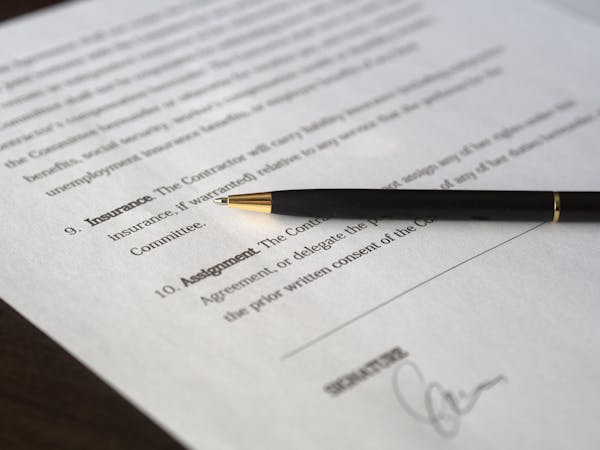
The signing of the contract finalizes the transaction. The signing can be held physically or digitally and is attended by both parties, the parties' representatives and their legal advisers.
As a result of the signatures, the contract and the terms and measures identified become binding on the parties. Signatures usually transfer, for example, ownership from the seller to the buyer as agreed. It is also common for the parties to agree that the purchase price of the object of the transaction will be paid at the time of the signing. However, the steps to be taken at the signing of the contract depend on the terms of the contract drawn up by the parties.



Risks and challenges in the M&A process
Integrating organizations is a complex and time-consuming process. Each business relies on their distinct systems, processes and workflows, which can lead to operational inefficiencies and disruptions. Additionally, companies have their own distinct corporate cultures and values that can result in employee conflict and maybe even loss of talent in the workforce.
Another challenge lies in the valuation of a company as it has a degree of uncertainty. Valuation of a company is not an exact science; however, it is crucial to not overvalue company assets either when acquiring a company. M&A transactions may burden financial resources leading to cash flow issues, increased debt and other unexpected costs.
Mitigating such risks and challenges from early on is vital as restructuring the business is quite common during the M&A process, only highlighting the significance of proper planning and conducting due diligence process.
In short: How does the M&A process work?
The M&A process is a complex and strategic undertaking that requires careful planning and expert guidance. From identifying a suitable target company to conducting thorough due diligence, each step plays a crucial role in ensuring a successful transaction. The culmination of these efforts is the negotiation and execution of a detailed purchase agreement, solidifying the terms of the deal. A well-executed M&A process can create significant value and drive long-term growth.
Be prepared for an M&A process – contact us
M&A is a process that culminates in signing the contract. Before this, however, many aspects of the transaction and its execution should be assessed and considered in order to ensure a successful M&A process. The M&A process should not be done carelessly. The importance of planning, conducting due diligence process as well as ensuring clarity and consistency of the terms and conditions cannot be highlighted enough in ensuring a successful M&A.
Are you looking to merge, sell or buy a business? We at Hedman Partners specialise in business law and can help with identifying your business goals, executing plans, and achieving your objectives while eliminating risks and seeing your projects through to their desired conclusion. Contact us for expert advice and help. We have experienced attorneys who understand entrepreneurship, are client focused and approachable. Contact our legal professionals here or contact us via our webpage.